Werewolf secrecy
How to Flirt with A Naked WerewolfWerewolf secrecy is a collective rule for keeping the pack’s supernatural identity from human society, and its force is clearest when concealment conflicts with health, safety, or personal choice. It is not merely a private confidence: it governs medical records, movement near Grundy, and responses to violence that might expose the wolves. The rule protects the pack, but its costs fall on individuals who need care or whose actions bring human attention close to the truth.
Meaning and Stakes
The rule is stated most starkly by Noah Graham, who refuses hospital treatment until Cooper reminds him that pack members have been hospitalized before without problems. Noah’s answer makes the hierarchy explicit: protecting the secret matters more than prolonging any one life. His position turns concealment from a preference into a communal obligation, even at a moment when medical care could benefit him. Cooper counters not by dismissing the secret, but by arguing that the hospital can be managed safely.
The rule’s importance reflects the unusual position of the wolves: they belong to an organized family and pack, yet must keep that identity hidden from the surrounding human community. Cooper explains that wolf nature and pack life are rooted in inherited instinct and a long-standing connection to particular territory. His move to Grundy, a hundred miles from the packlands, is described as profoundly difficult. Secrecy therefore operates alongside a powerful pull toward home: the pack’s members must manage not only what humans learn, but also where they live and how their presence is noticed.
Medical Care and Concealment
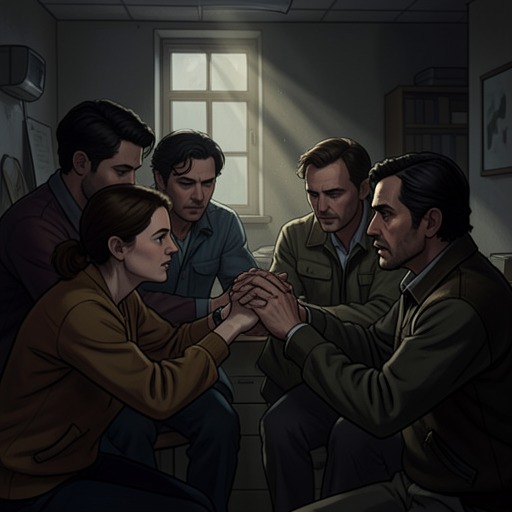
Cooper’s proposed solution to Noah’s refusal shows how the rule is handled in practice. He says Dr. Moder can cover discrepancies that arise during treatment and remove Noah’s records from the system afterward. The aim is not simply to keep a patient’s condition private; it is to prevent ordinary medical documentation from becoming a trace of the pack’s existence. Noah’s relatives gather at the door as Cooper argues with him, listening without apparent hostility toward the outsider who knows the family secret. The scene places medical decisions inside a family audience, where care and confidentiality are negotiated together.
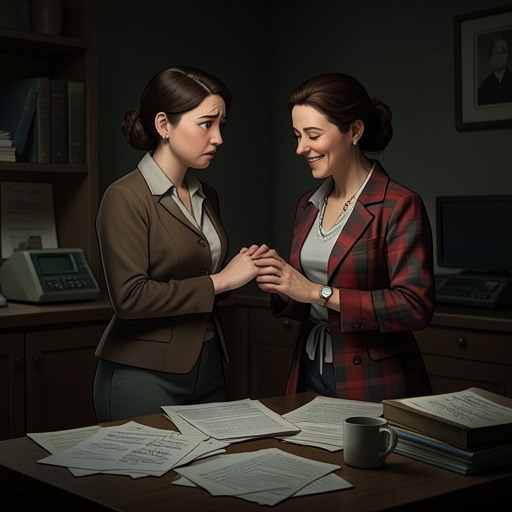
Dr. Moder’s later offer to examine Mo at home shows another way care can be adapted around secrecy. When Mo suspects she is pregnant, she worries that a visit to the village clinic will become town gossip before she can tell Cooper. Gracie Graham arranges a house call instead. Dr. Moder confirms the pregnancy, draws blood, provides prenatal vitamins, and gives Mo a pamphlet about carrying a werewolf baby. She also explains that shortened gestation raises hormone levels, and the pamphlet is to be passed off as a joke if anyone sees it. This episode concerns both the pack’s hidden biology and Mo’s wish to control who learns of her pregnancy; the secrecy surrounding her news is personal as well as supernatural. The discreet house call shows how medical help can be provided without requiring a public explanation.
Territory, Threat, and Human Attention
Secrecy also shapes the pack’s response to danger near Grundy. After reports of attacks, missing children, and wolf prints at a campsite, Cooper warns Eli that town residents are becoming agitated and discussing organized hunts. If a wolf is seen nearby, he fears, a pack member could be killed. Eli says he has seen reports on the news and instructed the pack to give Grundy a wide berth. The order serves more than territorial caution: avoiding the town may prevent further harm while reducing the chance that human suspicion turns into a hunt.
The danger is not abstract. Mo points out that Samson was sent near Grundy despite the traps in the woods, and that he could have been spotted or hurt. This exchange exposes a tension within the rule: keeping distance from humans may protect the pack, but secrecy cannot itself make the surrounding forest safe. Traps, sightings, attacks, and missing people create evidence that neither side can simply ignore. Cooper’s warning links the pack’s movements to the town’s capacity for collective violence, making concealment a matter of survival for both individual wolves and the group.
Knowledge, Kinship, and Leadership
The secret is not kept from every human. Evie DuChamp tells Mo that her own branch of the family is a dead line, then explains Cooper’s place in the pack and the significance of his having become a wolf. That disclosure gives Mo information necessary to understand Cooper, but it also marks her as someone brought across the boundary between human and pack knowledge. The evidence presents secrecy as a boundary that can be selectively crossed within relationships, rather than as a rule that prevents all disclosure.
At the same time, the boundary affects intimacy and family life. Cooper later apologizes for leaving Mo and explains that marking her binds him to her for life; the rule of lifelong mating belongs to wolf biology, while Mo’s pregnancy makes the consequences of that biology personally immediate. Her pregnancy is confirmed through a discreet visit, and she tells Alan Dahling that she intends to have the baby and remain in Grundy. The secret thus surrounds a future that cannot be kept private indefinitely, even though the couple’s choices about when to disclose it remain significant.
The rule also has political weight. Eli complains that Cooper’s emphasis on fairness and equality made him weak, while Eli believes himself entitled to lead. After Eli’s loss, Cooper still declines the alpha role; the pack instead selects its leader through a secret ballot, and Maggie Graham wins decisively. These events do not establish that secrecy determines leadership, but they show that the pack’s internal governance continues alongside its need to conceal itself from humans. Across medical care, movement, family disclosure, and political change, secrecy functions as a shared condition of pack life: it can protect the group, restrict individual choices, and make ordinary human institutions something the wolves must navigate carefully.